
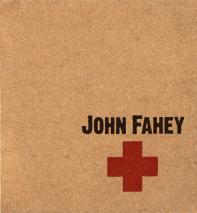
Consider this John Fahey's epitaph: after 17 minutes of silence at the end of the cd he was working on when he died in February 2002, comes two minutes and 15 seconds of yearning. Notes ring, chords fall apart, dissonant and distorted sounds mesh with tones clear as a bell. And as with much of Fahey's work, nothing moves very quickly. The lines reveal his folk-blues fingerpicking background, but nothing gets resolved. The notes hang in the air, some important, some only passing interests, but none finding release.
John Fahey struggled with, or against, his own musicality for much of his 34-year recording career. He recorded and self-released the first solo steel-string instrumental album, but his early innovations on folk guitar might be lost on contemporary ears. He stripped country-blues playing from song structure, creating throughout the '60s long, engaging yet peacefully perplexing pieces that rarely fell back on recognizable choruses.
Those early innovations were lost even on himself. In 1998, he told the British music magazine The Wire that he was embarrassed to see his earliest records being reissued. "The things I wrote are kind of beautiful, but they also have these chord patterns and stuff that draw you down," he said. "I consider those songs kitsch, because they are a mixture of emotions. They contain no clear statements about anything, and now I find them disgusting."
His other methods of escaping musicality -- using prerecorded sounds and musique concréte structures to create pieces that have been likened to John Cage and The Beatles -- are nowhere to be found on what has turned out to be his last recording. And despite his past protestations, it's a very musical disc. Including Irving Berlin and George Gershwin pieces, in any event, is not the easiest way to overcome emotion-laden chord progressions.
When a great musician dies, it's only natural to wish for a swan song. + isn't it. In the last few years of his life, Fahey abandoned the acoustic guitar, retained Jim O'Rourke as a producer and founded the second standing band he would lead -- the John Fahey Trio, an interesting amalgam of electric guitar, electronics, keyboard and percussion. (His only other ensemble was the John Fahey Orchestra, a much maligned and somewhat misguided early '70s project with Dixieland leanings. The group had its charm, although the orchestra's two records are probably Fahey's weakest.) Here he returns to the hollowbody for a set that is open-ended but more overtly musical than his last several recordings. Lovely blues waverings and lonely, echoing lines hit the purity of emotion he sought spot on. If it's not his most exciting record, it does help to make sense of the uncomplicated statements he wanted his music to make.
And if not a swan song, + does the next best thing a last record can do: it fills the listener with thoughts of what might have been. It's interesting, at this point, to hear such melodic material from him. Fahey was as given to making definitive statements as he was to recanting those statements, and what the next record might have been we can only imagine.